Monday, March 05, 2012

How big a lens do I need?

At LensesForHire we often get people asking for advice regarding what kind of focal length they will need.  This crops up with all sorts of applications - for example wildlife (e.g. on safari), birds, sport, motorsport, and theatre.

There are two straightforward ways to look at this, depending on whether you prefer a theoretical approach or a practical one.


The theoretical approach

If you can estimate how big your subject will be, and how far away it will be, then there's a relatively simple formula which can be used, and it gives quite good results in a lot of common situations.

The basic equation is:


Here are a couple of examples.  In each case let's assume I'm using my Canon 40D, which has an APS-C sensor measuring 22.2 x 14.8mm.

Let's suppose I want to photograph a giraffe, like this:


The big giraffe is about 4m tall, say, and I'd expect to be able to get within about 25m of it.  The sensor dimension which matters here is the 22.2mm because I'm shooting the giraffe in portrait orientation - the height of the giraffe aligns with the long dimension of the sensor.

So the focal length I need is ..... 22.2 x ( 25 / 4 ) x 0.75 = 104mm.


Or suppose I want to photograph the moon, like this:


The moon is 3,474km in diameter and its average distance from us is about 380,000km. This time the sensor dimension which matters is 14.8mm because I want to fit the diameter of the moon into the short dimension of the sensor.

So the focal length I need is ..... 14.8 x ( 380,000 / 3,474 ) x 0.75 = 1,214mm.


The formula is a pretty good approximation if you're shooting distant objects with a telephoto lens.  But don't try using it for close-ups or wide angles, because the approximation isn't reliable in those domains.

(By the way, the experts amongst you will have spotted that the factor of 0.75 in the equation is an arbitrary one to help give you a decent composition - you don't want your giraffe / moon to completely fill the frame, and this factor is there to give your subject bit of room to breathe in the frame.)


We find that even a "relatively simple formula" can faze some people.  And not everybody knows what size their sensor is.  So instead of doing all this maths, why not just take some pictures?

The other day we had an enquiry from a client who needed to shoot some people at an awards ceremony.  She'd be a little way from the stage - probably about 10 metres, give or take - but she wasn't quite sure how far.  And she wanted to know what sort of range of composition she would have available to her with a 70-200mm or 70-300mm lens.

Fortunately the LensesForHire office is quite long, and our colleague Richie would rather stand around mugging for the camera than doing real work, so I did some experiments.  I put a 70-300mm L lens on an APS-C Canon (a 350D as it turned out), I shot using all the focal lengths which are marked on the lens (70, 100, 135, 200 and 300mm), and I shot from ranges of approximately 15m, 10m and 5m.

Here are the results.  If you're going to be in a situation where you have to photograph people, you might what to take this along as a handy cut-out-and-keep guide illustrating what effects you'll get with different lenses.


Wednesday, February 08, 2012

Photography at the London 2012 Olympics, part 2

In my recent post "Photography at the London 2012 Olympics" I mentioned that spectators will be able to take photographic equipment into the Olympics venues as long as it fits into a bag measuring 30 x 20 x 20cm.  LOCOG have confirmed to me that the reasoning behind this is that a bag of that size will fit under your seat.

However, 30 x 20 x 20cm is one of the standard size boxes we use at LensesForHire for packing lenses.  So we've done some experiments to see how much gear we could fit into one of these boxes.


Our first thought was that a 300mm f/2.8 should fit.  The Canon one is officially 252mm long, and a bit longer with lens caps and lens hood, but we expected it would fit and we hoped there would be a bit of space to spare.  And we were pleasantly surprised.


Here we have:
(back row, left to right))
Canon EF 300mm f/2.8 L IS USM
Canon EF 24-105mm f/4 L IS USM
Canon EF 16-35mm f/2.8 L II USM

(front row, left to right))
Canon EF Extender 2x II
Canon EF Extender 1.4x II
Canon EOS 5D


and it all fits into the box quite comfortably.  In the following picture, the 300mm f/2.8 is at the bottom of the box (you can see its black leatherette lens cap, which we removed for the first photo), and the 16-35mm f/2.8 is standing upright in the back right corner under the Extender.


Now you might think that the 300mm f/2.8 is taking the mickey, just a bit.  It complies with the letter of the regulations, but arguably not with the spirit of the regulations.  (Andy Hooper told us that the regulations were intended to allow telephoto lenses up to roughly a 300mm f/4.)  And furthermore the London 2012 ticketing conditions  prohibit any behaviour which disrupts another spectator's comfort or enjoyment of the sport, and it might be argued that sitting next to someone waving a 300mm f/2.8 around would be a bit disruptive.  So we had another go to see what else we could pack into the same 30 x 20 x 20cm box.


Here we have:
(back row, left to right))
Canon EF 70-200mm f/2.8 L IS II USM
Canon EF 24-105mm f/4 L IS USM
Canon EF 100-400mm f/4.5-5.6 L IS USM

(middle row, left to right))
Canon EF 50mm f/1.2 L USM
Canon EF Extender 1.4x II
Canon EF Extender 2x II
Sigma 10mm f/2.8 EX DC HSM fisheye

(front row, left to right))
Canon EOS 40D
Canon EOS 5D


And again it all fits into the box very comfortably.  In the following picture, the 100-400mm and the 70-200mm f/2.8 are lying down in the bottom of the box at the right hand end, and the second camera body is standing upright at the right-hand end of the box, underneath the fisheye.


We could have got more into the box if we'd really tried to optimise it, but we thought two cameras, five lenses and two Extenders ought to be enough for most people!

So how much equipment will you be taking?

Wednesday, February 01, 2012

Photography at the London 2012 Olympics

Well here we are in February already, which means there are less than 6 months to go before the start of the London 2012 Olympics.  That's a significant milestone because at LensesForHire we accept bookings up to 6 months in advance, if you're hiring for a week or longer.

So the big question is, what kind of camera equipment will you be allowed to take into an Olympics venue?

It's been a bit confusing.  LOCOG's official ticketing conditions have about 7,000 words of dense legalese setting out what you must and may not do, and if you wade through them you'll find that the prohibited items include "large photographic equipment (including tripods)" (Clause 19.2.3) and the prohibited behaviours include "flash photography" (Clause 19.3.2).  But it doesn't define "large".

Back in March/April 2011 Amateur Photographer generated some controversy when it reported that even some compact cameras might be banned.   That prompted LOCOG to rush out a policy statement saying that DSLRs and high-zoom compact cameras would be allowed.

But there's still been no official definition of "large" photographic equipment.  Until now.

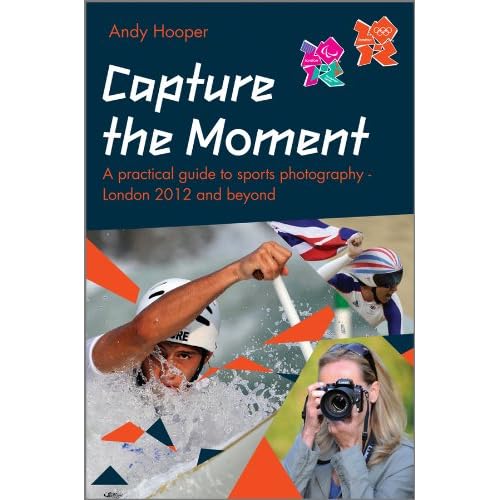
Last night I went to see Andy Hooper, chief sports photographer at the Daily Mail, talk at an event organised by Maidenhead Camera Club and the Sport In Focus 2012 project.  His talk was called "Capture The Moment".  That's also the title of his book, which is a practical guide to sports photography at the London Olympics.


Buried away on page 278 of the book, it says:
You are allowed to take camera phones, compact cameras and DSLRs into Olympic and Paralympic venues as long as the equipment fits into a bag no bigger than 30 x 20 x 20cm. .... Tripods and flash photography are not permitted within the venues.
Wow. 30 x 20 x 20cm? That's surprisingly big.

I made a point of asking Mr Hooper whether this really was official LOCOG policy.  His answer was that yes, these dimensions came from LOCOG. The book is an official London 2012 publication and these are the official guidelines.  The intention is to allow DSLRs with lenses up to about a 300mm f/4.  (Having said that, he also opined that LOCOG perhaps hadn't thought through the exact specification very thoroughly.)

So there you have it: you're OK as long as your equipment fits into a bag which is 30 x 20 x 20cm.  (Incidentally you don't have to have a bag which is that size; the requirement is just that your equipment would fit into such a bag, if you had one.)

Coincidentally, 30 x 20 x 20cm is one of the standard box sizes we use at LensesForHire.  We're going to have some fun over the next couple of days working out how much we can pack into one.

Personally, if I were planning to take a telephoto lens into an Olympic venue, I'd make sure I had a copy of Andy Hooper's book with me, open to page 278.  It's actually a very good book for anyone who's interested in photographing sports, and it's available for £14.99 from the LOCOG shop or somewhat cheaper from Amazon.


Monday, January 30, 2012

Welcome to the LensesForHire blog

Hi everybody.  For those who don't know me, I'm Stewart Robertson.  I'm the owner of Lenses For Hire Ltd. and I'll be using this blog to babble on about stuff that might be of interest to our customers and photographers more generally.

This is me in the office.


The artwork on the wall is a canvas by Paul Goldstein, who leads photographic trips for Exodus.  Paul is passionate about tiger conservation and we've helped raise a lot of money for his conservation projects.  We'll be doing more of that in the future too, so don't be surprised to see the odd hint that you can donate to his campaign!

So why is the picture of a polar bear instead of a tiger?  Well, that's a long story, but if you're interested I'll get round to it some day.